An Unexpected Treasure

The Joseph P. and Margaret James Collection

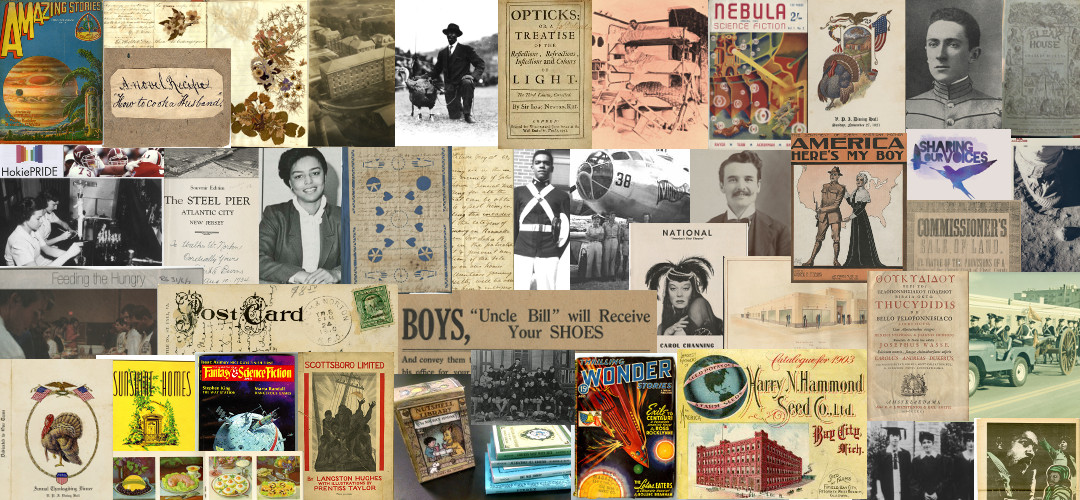
Sometimes, despite all of the proactive efforts we make in Special Collections to find new and interesting collections to add to our holdings, some of the best materials just fall right into our laps, thanks to the thoughtfulness of generous donors. Such is the case with the Joseph P. and Margaret James Collection, which was donated to us earlier this year by VT alumna Denise Hurd (sociology, 74). Though relatively small in size (approximately half a cubic foot), the collection relates notably to two of our focus areas (the Civil War and Appalachia) and touches on at least two others (culinary history and agriculture). The collection had been handed down from Hurds father, Festus Burrell James, and relates to the James family of Braxton County, West Virginia.

At the heart of the James collection are six Civil War-era letters to Margaret James from her husband Joseph P. James, who enlisted in Company L of the 14th Virginia Cavalry on October 4, 1862. Just 10 weeks later, Joseph was captured, and the first of his letters to Margaret was written from Camp Chase, Ohio, on January 28, 1863. In the letter, Joseph recounts his journey in captivity from Braxton County to Camp Chase and advises Margaret to move in with his father.

Margaret did move to her father-in-laws home, and her reply to Joseph provides a word from the war-time home front of northwestern Virginia (todays West Virginia). Dated March 14, 1853 [sic], Margarets brief letter shares news from Josephs family and neighbors. Having left her home, she hints at the hazards for a young mother living alone in contested territory during wartime (i havent Ben at home Since the first of febuary … but am going hom if i can get enybody to stay with me) and brings the absent father up to date on his childrens growth and behavior (Luther … is a bad boy. he swears yet[.] little vany can run just where he pleases. he is as fat as a little pig).

Margaret James' 1863 letter to her husband speaks of her concern and loneliness.
Margaret James’ 1863 letter to her husband speaks of her concern for her husband and her loneliness.

Joseph was exchanged and released in April, 1863. According to his service record, he transferred to Company I, 17th Virginia Cavalry while still a prisoner, and he must have immediately joined his new regiment; by May 10, Joseph was near Salem, Virginia, from which he wrote Margaret another letter. He discusses the Jones-Imboden Raid into northwestern Virginia, then mentions three acquaintances who were sent to Montgomery White Sulphur Springs to convalesce. Always present in Joseph’s letters are his love for his family and his desire to return home. He mentions sending a lock of hair to Margaret and receiving locks from her and their sons, a common practice at the time (see our blogpost of October 30, 2014, The Hairy, Scary Things That Time Forgot!).

By that autumn, poor health had forced Joseph to fall behind his company and miss the opportunity to return to Braxton County with his comrades. The route being too hazardous to travel alone, Joseph instead recuperated in Mercer County, and he wrote Margaret from there on November 5 and 25. Josephs final war-time letter was written from Red Sulphur Springs in Monroe County, West Virginia on April 15, 1864. In this letter, Joseph dispels rumors that he had been captured by the enemy or imprisoned as a deserter. He admits having been absent without leave, then boasts of the lenient punishment given him. It is Josephs lengthiest letter, and he goes into detail about what the men are eating and the religious services in which theyre participating. Six months later, Joseph would again be reported absent without leave, and in the final weeks of the war, he was listed as a deserter. Josephs letters give us today a brief but valuable glimpse into the life of a soldier whose service was spent almost entirely in southwestern Virginia.

The James Collections includes many tintypes, including these two interesting photos of Civil War soldiers. Might one or both of these photos be of Joseph P. James?
The James Collections contains many tintypes, including these two photos of Civil War soldiers. Might one or both of these photos be of Joseph P. James?


Joseph_James002

The James Collection extends well beyond the Civil War, however. From the end of the war until his death in 1889, Joseph James maintained a series of memorandum books to record information that he deemed significant. Nearly every 19th-century farmer seems to have kept account books, detailing farm, business, and personal financial transactions, and we hold many pocket-sized ledgers in Special Collections. Joseph’s books are a bit unusual, though, in that they frequently contain other items of interest. One book contains notes on a trial for the murder of Jemima Green, a case on which Joseph served as a juror. Elsewhere, one might find records from Joseph’s work as a mail carrier, quotes from Bible scripture, notes on deaths in the family and neighborhood, and recipes for home remedies. Though recorded somewhat haphazardly and in no particular chronological order, the entries as a whole provide a fairly complete look at the activities and concerns of a fairly typical Appalachian farmer for nearly 15 years during the latter half of the 19th century.

Joseph_James006
Joseph James’ memorandum books contain an eclectic mix of information the various aspects of his life: home, farm, business, and church.

The collection also contains a few items that had belonged to the James youngest son, Charles (1885-1949), who left Braxton County and worked as a motorman in Clarksburg, West Virginia, where he also raised hens and rabbits. Like his father, Charles made use of memorandum books, and in the few that we have, he briefly recorded anything of interest to him, from the day his cat died to the day he saw President Roosevelt.

Unfortunately, theres just not room for me, in this one brief blogpost, to mention all of the interesting little things in the Joseph P. and Margaret James Collection, but it would be a mistake to dismiss it as being of interest only for its Civil War letters. The collection has yet to be processed, meaning that it has not yet been fully organized and inventoried, but as with all of our treasuresboth expected and unexpectedthe collection is available for the use of researchers in the Special Collections reading room during our normal operating hours.

Uncovering Hidden Histories: African Americans in Appalachia

One of our many roles in Special Collections is to shed light upon hidden histories, uncovering communities that are traditionally marginalized or forgotten by time. The long history of African-Americans in Appalachia, for example, has traditionally been overlooked. Through the communities of New Town, Wake Forest, and Nellies Cave (among others), Montgomery County has a particularly rich legacy to explore. We work with historians, genealogists, community members, and other institutions to document and preserve these stories for future generations.

Newman Library currently hosts New Town: Across the Color Line, an exhibit documenting a predominantly African-American community that bordered the Virginia Tech campus until the late 20th century. Developed by the Virginia Tech Public History program, the exhibit includes items from the Blacksburg Odd Fellows Records (Ms1988-009) held by Special Collections. The exhibit will be open from October 5 through November 20.

Brochure for New Town Exhibit on display in Newman Library, October 5 - November 20

The Odd Fellows Records help document an important African-American civic institution in early 20th century Blacksburg. Researchers interested in the experiences of African-Americans in Montgomery County and greater Appalachia can find many other resources in Special Collections.Manuscript collections, photographs, oral history interviews, and rare books provide insight into the experiences of African-American communities from antebellum times through the present day. The Christiansburg Industrial Institute Historical Documents (Ms1991-033) represent a collaboration between the Christiansburg Industrial Institute Alumni Association and Special Collections to document the prestigious institutionthat educated generations of Virginia students from the 1860sthrough school integration.

Black and white photograph of Baily-Morris Hall, a building on the campus of Christiansburg Industrial Institute. Several African American teachers stand on a staircase in front of the building.
Baily-Morris Hall on Christiansburg Institute campus with teachers, date unknown.

Another collection, entitled Hidden History: The Black Experience in the Roanoke Valley Cassette Tapes and Transcripts (Ms1992-049), includes approximately forty-six interviews with African-American residents of Roanoke, Virginia about the cultural, social, and political history of their community. The research papers of historian and community activist Richard Dickenson (Richard B. Dickenson Papers, Ms2011-043) include a wealth of information about local African-American history, including the free communities of antebellum Montgomery County and the many civic institutions of Christiansburg. The John Nicolay Papers, (Ms1987-027) include research files and oral histories that provide insight into churches, local institutions, and the historic African-American community of Wake Forest.

These collections represent a small fraction of the primary sources and publications that document African-American history in Special Collections. More importantly, these resources point to an abundant history still waiting to be uncovered.

Celebrating Virginia Tech LGBTQ History

Invitation to celebration of Virginia Tech LGBTQ Oral History Project
Brian Craig graphics.

Special Collections is collaborating with the Department of History, the Ex Lapide Alumni Society (the Lesbian, Gay, Bisexual, Transgender, and Queer alumni network at Virginia Tech), HokiePRIDE, and the LGBT Faculty/Staff Caucus in an oral history project that seeks to document the LGBTQ experience at Virginia Tech. The University Archives started the project at the request of the Ex Lapide Society.

Beginning in the fall of 2014, David Cline and the students in his oral history classes studied LGBTQ history and began collecting oral histories to document the history of LGBTQ life in the 20th century American South and specifically at Virginia Tech. Cline is Associate Director, Public History Program in the Virginia Tech Department of History. Megan Lee Myklegard of Ocala, Florida, a junior majoring in marketing management in the Pamplin College of Business, collected additional oral history interviews. Myklegard received an Atlantic Coast Conference (ACC) Creativity and Innovation Grant to collect and transcribe nine interviews. The University Archives also conducted oral history interviews for the project.

A new web archive created in Omeka by Adrienne Serra, technical archivist for Special Collections, features full text and sound of the interviews, along with images, historical documents, and a timeline of significant events in the LGBTQ history of Virginia Tech http://digitalsc.lib.vt.edu/exhibits/show/vtlgbtq-history. The new site uses Oral History Metadata Synchronizer (OHMS) to enhance access to the oral histories, providing a word-level search capability and allowing users to move from the interview index to the corresponding moment of the recorded interview online.

Sharing Our Voices: A Celebration of the Virginia Tech LGBTQ Oral History Project will include an exhibit of Special Collections materials and web launch on Saturday, October 10, 2015 on the first floor of Virginia Techs Newman Library. The exhibit will be open on Saturday from 2:00 pm to 5:00 pm and on Monday, October 12 from noon to 4:00 pm.

The exhibit will have two parts. Each of the eight screens in the multipurpose room will feature different materials related to the project or to the interviewees. The projects web site and timeline will be on display so that users can explore the site. One screen will show a video of the 1986 AIDS Conference held at Virginia Tech. Its Reigning Queens in Appalachia, a film by Carol Burch-Brown, Professor, Studio Art and Creative Technology in the School of Visual Arts, will be screened. The film includes audio clips and photographs from the Shamrock Bar, a gay bar in Bluefield, West Virginia. Megan Lee Myklegard prepared a short film to highlight the oral histories she did through her ACC grant. Luther Brices chemical magic show will be shown. Brice, also known as Merlin the Magician, won both the Wine and Sporn awards for excellence in teaching at Virginia Tech. Mark Webers (class of 1987) student slide show on transvestites will be on display. Images from campus groups, including HokiePRIDE, o-STEM, QPOC (Queer People of Color), and the LGBT Faculty/Staff Caucus will be highlighted on another screen.

The second part of exhibit will be in the skylight area of Special Collections and will feature books, art, and archival materials related to the LGBTQ experience or created by individuals who identify as LGBTQ. Laurel Rozema, Processing and Special Projects Archivist, and Anthony Wright, Resident Librarian curated the exhibit.

During the month of October, there will also be a special seating area outside the multipurpose room with screens where one might access the new LGBTQ timeline on the web site and other relevant materials. A selection of books from Newman Library will be available to read or check out. Books include Gregory Edward Allen’s Lambda Horizons Collection and winners of the Stonewall, Lambda Literary, and Rainbow List awards.

Refreshments will be served at the Saturday celebration. The event is free, and the public is welcome.

LGBTA VT: thechangeproject

Beckett and Gorey at Gotham

All Strange Away by Samuel Beckett, Illustrated by Edward Gorey; Published by Gotham Book Mart, 1976
All Strange Away by Samuel Beckett, Illustrated by Edward Gorey;
published by Gotham Book Mart, 1976

A few days ago, for no apparent reason, except, perhaps all the rain we’ve been having, I thought of a quote from a book by Samuel Beckett. Even though it had been about forty years since I first read it, I remembered the quote quite well. The in-and-of-the-world lyrical beginning was especially unusual for Beckett, in my experience. Still, I could not remember which book it came from. Beckett was a favorite in those days, and I had read a lot of his work (maybe more than was good for me) in a pretty short period of time. I didn’t think it was a particularly famous quote. For example, it wasn’t the end of The Unnamable:

. . . you must say words, as long as there are any, until they find me, until they say me, strange pain, strange sin, you must go on, perhaps it’s done already, perhaps they have said me already, perhaps they have carried me to the threshold of my story, before the door that opens on my story, that would surprise me, if it opens, it will be I, it will be the silence, where I am, I don’t know, I’ll never know, in the silence you don’t know, you must go on, I can’t go on, I’ll go on.

Nope, not that one. It wasn’t from the scene in Molloy that involves sixteen sucking stones, a number of pockets in a greatcoat (and trousers), and an attempt to place the stones in those pockets in such a way that Beckett’s character could most easily assure himself of sucking those stones in equal measure over time.

And it wasn’t the passage that begins with, “I can’t help it, gas escapes from my fundament on the least pretext” and ends with, “Extraordinary how mathematics help you to know yourself.” This is also from Molloy, and I’ll let you imagine what comes between those two fragments.

At about the same time I was trying to remember which book “my” quote came from, I realized that I’d never seen nor gone in search of a book by Beckett in Special Collections. This, of course sent me to the stacks (ok, to Addison, first) in search of Beckett. I know we have a large collection of modernist fiction, but over more than seven years . . . no call for Beckett. What I came up with surprised me. Not only was it a book I’d never seen before, it was one I’d never heard of. This required a bit of sleuthing.

The book, All Strange Away, was written in 1963–64, but not published until 1976 in the special edition we have in Special (naturally) Collections . . . an edition illustrated by Edward Gorey! (! The idea of a collaboration between Gorey and Beckett is amazing itself !) That’s a picture of Gorey at the top of this post, along with one of Beckett and the covers and spine from All Strange Away. Gorey wrote more than 100 books and illustrated many more. His dark sensibilities are often front-and-center in books like The Gashlycrumb Tinies in which twenty-six children whose names begin, in sequence, with each letter of the alphabet, have their deaths described (and illustrated) in one of twenty-six ways . . . all in rhyme, of course. (“M” is for Maud who was swept out to sea. “N” is for Neville who died of ennui.) Beckett’s text in All Strange Away begins:

Imagination dead imagine. A place, that again. Never another question. A place, then someone in it, that again. Crawl out of the frowsy deathbed and drag it to a place to die in. Out of the door and down the road in the old hat and coat like after the war, no, not that again. Five foot square, six high, no way in, none out, try for him there.

All Strange Away, title page

Like several of Beckett’s works from the mid-sixties, All Strange Away takes place in a bare space, or nearly bare. A stool is present, but the only dynamic seems to be imagination, that and the alternate presence and absence of light. Oh, and, maybe, the space changes size. In this text, the space is called the Rotunda and only one person inhabits it. In The Lost Ones, started by Beckett in 1966 and published in 1970, the space is a flattened cylinder 50 meters around with rubber walls 18 meters high. Two hundred people inhabit this space, which leaves about 1 square meter per person. Light and heat fluctuate, and there are ladders with which to climb the walls, and recessed spaces in the upper parts of the wall to occupy. I remember reading The Lost Ones, too.

Gorey’s illustrations, one or two per page, grace the margins of All Strange Away. Here are three of them:

But wait, there’s more. How did Beckett and Gorey, who could be seen as an ideal illustrator for Beckett, ever get together in the first place? The key lies in the publisher, the Gotham Book Mart of New York. First, if you’ve never had the opportunity to visit the Gotham Book Mart, forget it. You missed your chance. This literary bookshop and meeting place—the kind of place that just doesn’t exist anymore—closed in 2007 after operating continuously somewhere in midtown Manhattan (it did move a few times) since 1920. It was still enjoying its long heyday when I used to visit in the 1970s and 80s. The James Joyce Society, for example, was founded there in 1947 with the founder and owner of the shop, Frances Steloff, serving as the society’s first treasurer.

If you lived in New York and were interested in things literary, it was a regular stop. If you were visiting town, you’d go to see books that you’d see nowhere else, along with dozens and dozens of photographs of writers, often in the shop, perhaps standing where you were standing.

Gotham Book Mart, 9 November 1948. Among the authors present: W. H. Auden, Stephen Spender, Elizabeth Bishop, Marianne Moore, Gore Vidal, Delmore Schwartz, Tennessee Williams, Randall Jarrell
Gotham Book Mart reception, 9 November 1948. Among the authors present: W. H. Auden, Stephen Spender, Elizabeth Bishop, Marianne Moore, Gore Vidal, Delmore Schwartz, Tennessee Williams, Randall Jarrell

Although Gorey’s first book, The Unstrung Harp was published in 1953 and The Doubtful Guest (1958), did much to establish his standing among a wider readership, it was his friendship with Andreas Brown, owner of the Gotham beginning in 1967, that really propelled his career. Actually, the Gotham Book Mart published more than a dozen of Gorey’s books, exhibited his illustrations, and, generally, brought him and his work to something like a mass audience. (Gorey’s annimation appears every time Mystery! is introduced on PBS.) One presumes that Brown may have brought the Beckett to Gorey, but I know of no details on the matter. I now know that Gotham Book Mart also published another collaboration between the two, Beginning to End, in 1989, just before Beckett died.

And . . . did I mention that the book is signed by both Beckett and Gorey . . . and numbered! Our copy is number 136 of 200.

signednumbered_withInset

All in all, this was quite the find. You never know what will show up in Special Collections until you have reason to look. (Today, I found out that we have a first [1854] edition of Thoreau’s Walden. But that’s a story for another day.)

So what was the quote that provided the germ for this post? It was from a work of Beckett’s called The End, written in 1946:

The earth makes a sound as of sighs and the last drops fall from the emptied cloudless sky. A small boy, stretching out his hands and looking up at the blue sky, asked his mother how such a thing was possible. Fuck off, she said.

How do you top that on a rainy day?

Serialization of the 19th Century Novel

In the 1830s, a new trend began in publishing (a “novel” idea, if you will!): Novels started to appear in newsstands. But rather than publishing in a large, cumbersome form that one couldn’t carry easily, they were issued in small, portable, serialized segments. Dickens’ The Pickwick Papers was the first to appear this way in print, but he wouldn’t be the last author to try it (a bit more on that in a moment). For authors AND audiences, this format had a number of advantages. For authors, it meant they could begin to sell a story before it was completed, that they didn’t actually have to have everything plotted out, and they had a little more time to write. For audiences, it meant following a story as it unfolded (rather than waiting for a full novel), a more dramatic reading experience that was drawn out by having to wait, talk with people, and guess, and easier to access the literature of the era. Novels were expensive, but a single serial volume could be purchased for a shilling and passed from person to person. Of course, this does mean the volumes were ephemeral, on cheap paper, and not meant to last. Lucky for us, some of them survived. Special Collections is home to a number of serialized novels, either in complete or mostly complete form.

The first of two we’re sharing today is Charles Dicken’sBleak House, originally published in 20 parts (though two are combined, so it’s only 19 volumes) between 1952-1953. (Due to the fragile nature of the publications and the bulky nature of their housing, I had to photograph, rather than scan these items. Apologies for the occasionally blurry quality and/or fingertips!)

The second example is William Thackeray’sThe Virginians, published in24 parts between November 1857 to October 1859.

Other than the obvious fact that these are different authors and different novels, there’s something else unique about the serialized novel: when a novel was issued independent of another publication (the parts of many serialized novels appears within literary magazines of the time), authors had their own color for a cover. It made new parts stand out on shelves and caught potential readers’ eyes. Dickens’ covers were blue, Thackeray’s were yellow. George Eliot’s covers were green, and from what I’ve found so far, Anthony Trollope’s were brown (at least those from the same publisher). I think I recall another writer having purple covers, but I haven’t been able to come up with who that was. If you know, let me know in the comments!

A little later in the 19th century, another form of the serialized book emerged: the “three-volume” novel (aka the “three-decker” or my favorite, the “triple-decker”). Longer novels like Henry James’ The Portrait of a Lady or George Eliot’s Mill on the Floss both appeared in this format (we have a copy of the latter in our collection). The triple-decker afforded some of the convenience of the serial in a more condensed form and by the time it was popularized, book-making processes (and consequently book-buying) had become cheaper. On the other hand, both established and newauthors of the age began to make their living this way, many of them through sensational, overly-dramatic tropes and as a result, in some literary circles, the triple-decker took a lot of criticism and mockery. As one of Oscar Wilde’s characters remarks in one of my favorite plays,The Importance of Being Ernest, “It [a baby carriage] contained the manuscript of a three-volume novel of more than usually revolting sentimentality.” (Wilde himself published some of his writings in serial format in literary journals of the time, though he didn’t produce anytriple-deckers.)

Whether you’re an English major, a literature lover, or just curious about unique formats of books, you’re always welcome to pay us a visit to see our serial sets, three-deckers, and more!

Exploring Virginia and America Through Time (with Maps!)

When determining a topic for this week’s blog post, I discovered very little has been written about Special Collections’ historical maps. We have over 800 individual maps along with special map collections, such as the Robert Holman Map Collection and the Pocahontas Mines Collection. (We are currently working on the Pocahontas Mines Collection of over 7,000 maps and will have posts devoted to it in the future, so keep an eye out!) The maps primarily document Virginia and the Appalachian region from the 18th to 20th centuries. But the maps I’d like to share with you date to the days of European colonization and American independence.

The above map, “Virgini partis australis, et Florid partis orientalis, interjacentiumque regionum Nova Descriptio”, is a reproduction of Dutch cartographer Joan Blaeu’s 1640 map of the North American coast from Florida to Virginia. Marked in the upper right corner is “Chesapeak” or Chesapeake Bay and towards center left are the “Apalatcy” or Appalachian Mountains. The map also identifies different Native tribes, such as the Houstaqua – probably the Yustaga people of the Florida Panhandle – and the Powhatans of Virginia. The back of the map discusses Florida, showing that the map was once part of a Latin language atlas.

This map, “Virgini Partis australis, et Florid partis orientalis, interjacentiumque regionum Nova Descriptio”, is a reproduction of a map in Arnoldus Montanus’ De Nieuwe en onbekend Weereld, published in 1671 by Jacob Meurs. When compared against Blaeu’s map, very little has changed in the description of the land, although the visual depictions are fuller and more colorful.

Jump forward to 1784, and you get this more detailed, albeit less visually arresting, depiction of North America east of the Mississippi River. This reproduction identifies the boundaries of the United States as defined by the Treaty of Paris, which ended the American Revolutionary War. Like the other maps above, this one identifies Native tribes, but it also includes new landmarks, cities, and states, showing how the changing political and cultural landscapes affect cartographic description.

As I mentioned, these are just a few out of hundreds of maps held by Special Collections. If you’d like to peruse more, check out those we’ve digitized and put up online or come in to the reading room and take a look at them yourself!

Update, Jan. 12, 2021:

The processing of the Pocahontas Mines Collection, Ms2004-002 is now complete, and there are additional posts related to the collection:

Buttresses to Broadway: When Lilia Skala Came to Blacksburg

On July 30, 2015, the Lyric Theatre presejtedLiLiA!, a one-woman show performed by actress/playwright Libby Skala from the Groundlings Theatre in Los Angeles and the Arclight Theatre Off-Broadway to festivals in Seattle, London, Toronto, Vancouver, Edinburgh, Berlin, Dresden, and beyond. Reviewers have called it absolutely dazzling magical and alchemical, a unique and spellbinding production at once appealing and a privilege to view, and a thoughtful piece of history – political, theatrical and personal. Although the Lyric is no stranger to great performances, you might find yourself wondering how such a prestigious production came to tread the Blacksburg boards.

In 2003, Special Collections added a portfolio of architectural drawings by a woman named Lilia Skala to the International Archives of Women in Architecture. The collection (Ms2003-015) primarily comprises her work as a student of architecture at the University of Dresden from 1915 to 1920. Her student work includes architectural drawings, ink and charcoal sketches, and watercolor paintings. The collection also includes copies of her academic records, printed material about the architectural program at the University of Dresden at the turn of the century, articles by and about Lilia, and press material forLiLiA!

[Learn more about the Lila Sofer Skala Student Portfolio in Special Collections]

[Learn more about the donation, from Skalas sons Peter and Martin]

Special Collectionsjoined the cast in 2003, but thereal story – Lilias story – begins much earlier.

In 1896, Lilia Sofer Skala was born in Vienna, Austria. Although she had an early passion for the performing arts, Lilias family wanted her to have a more respectable career. Having graduated Summa cum Laude with a degree in architecture from the University of Dresden, Lilia became the first woman member of the Austrian Association of Engineers and Architects. She practiced professionally in Vienna for a time and, with the encouragement of her husband, began performing with the Max Reinhardt Repertory Theatre. Lilia gained wide acclaim in Europe for her stage and screen roles, but continued to claim her title, Frau-Diplom Ingenieur.

When her Jewish husband was arrested in the wake of the Anschluss – the annexation of Austria by Nazi Germany – Lilia secured his release from a Viennese prison and fled with her family to the United States. Her portfolio of student work was among the personal belongings with which she escaped. As a political refugee in New York, Lilia attended night school to learn English and worked in a Queens zipper factory for her first two years in America.

Lilia returned to the stage as a housekeeper in the 1941 Broadway production Letters to Lucerne. She continued to work steadily on and off Broadway, with occasional television roles. In 1963, Lilia earned an Oscar nomination for Best Supporting Actress as Mother Maria opposite Sidney Poitier in Lilies of the Field. She later received a Golden Globe nomination for her role in 1977s Roseland. An industrious performer, Lilia continued to work in film, television, and theatre throughout the 1980s. Among her many accolades was the Western Heritage Wrangler Award from the National Cowboy Hall of Fame, which she received in 1981 for her role in Heartlands. Lilias final stage appearance was in Lorraine Hansberry’s Broadway showLes Blancs (1989), at the age of 94.

In December 1994, Lilia passed away from natural causes in her New York home. Her granddaughter, Elizabeth Libby Skala, is also an accomplished actress and playwright. She began developing LiLiA!, a one-woman show based on her grandmothers phenomenal life, in 1995. Libby Skala was invited to perform this show during the 18th Congress of the International Union of Women Architects (UIFA), which was jointly hosted by the IAWA in July 2015. Her audience included Blacksburg locals and women architects from Argentina, Eastern Europe, Germany, Israel, Japan, Mongolia, Spain, and beyond. Many of the architects recounted that the performance was a highlight of the conference.

Special Collections currently has an exhibit on display featuring selections from Lilias portfolio and materials advertising the LiLiA! play.

Lilia Skala Portfolio Exhibit, July 2015

More selections from the SkalaPortfolio,Special Collections:

Literature in Southwest Virginia

Author Lucy Herndon Crockett wasn’t born in Southwest Virginia, but that doesn’t mean we can’t add her to the list of American writers with ties to the area. She moved to Seven Mile Ford (Smyth County), Virginia, later in her life in 1947, and worked on several books and manuscripts there. Born in Hawaii in 1914, she travelled as a speech writer and secretary for the chairman of the American Red Cross, and served as a Red Cross worker in World War II, spending time in the South Pacific and Asia. This time abroad was a strong influence the books she wrote during and after the war. Crockett was also an illustrator, creating drawings for her books and the books of others. One of her first publications, from the 1930s, was actually a short booklet on decoupage and decoration. Her interests were as varied as her subjects.

The gallery below includes images itemsin Special Collections, including an inscribed edition ofPong Choolie, You Rascal–! and typescripts with Crockett’s edits to published and unpublished manuscripts.

During her career, Crockett wrote 11 books and illustrated many more. Since 2011, Special Collections has acquired copies of all of her authored works(see the list below), though a few are still in cataloging. They should be available soon. Crockett’s audience varied. Lucio and His Nuong and That Marioare related books (Lucio and Mario are brothers) written for children and younger adults. Popcorn on the Ginzo, Teru, and The Magnificent Bastardsreflect her experiences living in Asia after World War II, as well as her other later works, were for adult readers.


Bibliography
c.1930s?-Decoupage: The Pleasures and Perplexities of Decorating with Paper Motifs
1939- Lucio and His Nuong: A Tale of the Philippine Islands
1940- Capitan: The Story of an Army Mule
1941- That Mario
1949- Popcorn on the Ginzo: An Informal Portrait of Postwar Japan
1950- Teru: A Tale of Yokohama
1953- The Magnificent Bastards (Later made into a movie- The Proud and Profane)
1957- Kings Without Castles
1960- The Year Something Almost Happened in Pinoso
1963- Pong Choolie You Rascal!
Unpublished manuscript, dated 1972- “Bus Station Blues”


You can read more about the collection and Lucy Herndon Crockett in the finding aidonline. You can also visit us to see more of the collection. There are many authors with connections to our area, and Crockett isn’t the only about whom we have papers and manuscripts–we’ve recently acquired materials by and about Sherwood Anderson, for example. However, Crockett is a lesser-known name in many circles. By preserving and providing access to these papers, we can offer a little insight into her creative experience, and hopefully, introduce her to a new audience in a new century.

When Orange Became The New Black (and Maroon the New Gray)

1896, a Formative Year for Virginia Tech Football

With a new school year about to start, and Lane Stadium soon to be filled with cheering fans, we cant resist offering a little lesson from Hokie History 101. Well, this piece may belong in a 200-level course, since weve included a few obscure facts that the average fan isnt likely to know.

In recognition of its broadening curriculum in science and technology, the Virginia Agricultural and Mechanical College in 1896 became the Virginia Agricultural and Mechanical College and Polytechnic Institute. The new name being more than a mouthful, it was shortened in popular usage to Virginia Polytechnic Institute, or VPI.

The schools fledgling football program underwent changes of its own that year. Early on, the college had adopted school colors of black and cadet gray, but when worn on a striped football jersey, the colors resembled a prison convicts uniforma similarity that undoubtedly became a source of ridicule from opposing teams.

Norbon R. Patrick, a guard on the 1893 team, poses in the jersey that necessitated a change of school colors.
Norbon R. Patrick, a guard on the 1893 team, poses in the jersey
that necessitated a change of school colors.

A committee reviewed the colors used by other colleges and decided that burnt orange and Chicago maroon would provide a unique color combination (as indeed it did and continues to do). The new colors debuted not in the opening game of 1896, but in the second game, at home against Roanoke College, on October 20.

The black jersey sported by the 1895 team, just prior to the schools name change, featured the letters AMC encircled by a large C in white.
The black jersey sported by the 1895 team, just prior to the schools name change,
featured the letters AMC encircled by a large C in white.

The first orange-and-maroon jersey featured an oversized V under a smaller P, reflecting a de-emphasis of the word Institute in popular usage of the schools name.
The first orange-and-maroon jersey featured an oversized V under a smaller P, reflecting
a de-emphasis of the word Institute in popular usage of the schools name.

Changes came to fan support, as well. By the 1890s, the college cheer, or yell, had become a popular means of boosting enthusiasm at campus athletic events. As long as they incorporated the name of the college and / or team, the words in these yells werent as important as the rhythm and tone. Cheers relied on creative, invented words–words that were easy and fun to yell–as is evident in the first yell adopted by VAMC:

Rip, Rah, Ree,
Vah, Vah, Vee,
Vir-gin-i-a
A. M. C.
Vir-gin-i-a
Virg-gin-i-a
Ree, Ree,
A. M. C.

An abridged, peppier version of the longer yell seems to have been used more frequently by fans at games:

Rip, Rah, Ree!
Va, Va, Vee!
Virginia, Virginia!
A-M-C!

By the 1895 season, the students had adopted a new, somewhat more complex college yell, published in the 1896 Bugle:

Hicki! Hicki! Hicki!
Sis! Bom! Bar!
A. and M. College,
Wah! Who! Wah!
Vivla! Vivla! Vivla! Vee!
Virginia! Virginia! A. M. C.!

The “Wah! Who! Wah!” bit may have been a little too reminiscent of the “Wah-hoo-wah!” yell of University of Virginia fans, and the 1896 Bugle records a separate yell that was used to cheer the 1895 football squad :

Do! Do! Ha! Ha! Dom-i-di-i-dee;
Wah! Wah!
A. M. C.
Hip Hip, Hip, Hurrah!
Virgin-u-a!, Virgini-u-ah,
Wee! Wee!
A. M. C.-c-c-c-c-c-boom!!!! Football

The schools new name rendered these yells obsolete, but rather than simply incorporate the new name into existing yells, the Athletic Association sponsored a contest for a new yell (which, as things turned out, is fortunate, or we might otherwise all be cheering Lets go, Hickies! or be members of the Do Do Nation today). The composer of the winning entry would receive a five-dollar prize.

Oscar Meade Stull (1874-1964), a senior majoring in applied chemistry and serving as cadet first lieutenant and adjutant, put his imagination to work in composing a cheer that used fun, invented words and incorporated the schools new name:

Hoki, Hoki, Hoki, Hy!
Techs, Techs, VPI!
Sola-Rex, Sola-Rah.
Polytechs Vir-gin-i-a!
Rae, Ri, VPI!

Oscar Meade Stull, '96, the first person to ever hear the What is a Hokie? question.
Oscar Meade Stull, ’96, the first person to ever hear
the What is a Hokie? question.

Stulls submission became the winning entry and is said to have made its debut when the cadets traveled to Richmond and participated in the laying of the cornerstone for the citys Jefferson Davis monument on July 2, 1896. As Stull recalled some 60 years later, I was surprised when my yell was accepted, but I needed the five spot. In addition to the fiver, Stull earned a lasting place in Virginia Tech history. The legacy was an unexpected one. In a 1956 letter to Virginia Tech library director Seymour Robb, Stull wrote, I am more surprised in recent years that [the Hokie yell] has endured for 60 years!

According to various histories, 1896 also marked the year in which Floyd Hard Times Meade (1882-1941) came to be associated with the football team. Just 14 years old at the time, Meade worked part-time in the campus mess hall and was adopted as an unofficial mascot by the team. As mascot, Meade frequently performed at games dressed as a clown in orange and maroon, his antics probably not so dissimilar to mascots of later years. Meade would later figure prominently in the evolution of the teams mascot and traditions. But his is a story for a future blog post.

Floyd Hard Times Meade, from the 1899 Bugle.

The traditions begun in 1896 served the team well. The VPI gridders won that first orange-and-maroon game over Roanoke College 12-0, and the team eventually went 5-2-1, ending the season with a 24-0 rout of then-archrival VMI. The eight-game season was the longest played since the teams founding, and though it would be nearly a decade before VPI regularly played that many games a year, the success of that season proved the feasibility of scheduling more games.

It would take some time for an e to be added to Stulls hoki, and though his cheer incorporated the names Techs and Polytechs, the school seems to have made little effort in promoting the use of these names. The Cohee, an 1897-1898 publication of the Athletic Association, makes no mention of the names; the press most often referred to the team simply as V.P.I. or by generic terms such as the Blacksburg eleven. It would be several years before VPI teams came to be known more commonly as Techs, Polytechs, or Techmen; more than a decade to be known as The Gobblers; and still longer to be called The Hokies, but the seeds for all that has followed were sown in 1896.

Climbing the Water Tower: How Women Went from Intruders to Leaders at Virginia Tech

In the early 1920s, the first female students at Virginia Tech were not quite welcome. They had special rules to follow, there were no dormitories for women, and male students would throw water on them as they passed by the dorms. But one day, Ruth Terrett, a civil engineering student, decided to show the men she could do just as well as them. She donned a cadet uniform and climbed the university’s water tower, a tradition the male cadets undertook to prove their strength and ability. That day, Ruth proved that women, when given the chance, could do what men could.

Women throughout Virginia Tech’s history have encountered many obstacles, and have consistently overcome them. Sam Winn and I recently searched through Special Collections’ holdings to document these women and their achievements in the university’s history. Our work culminated in an exhibit at the Alumni Associations Women’s Weekend and a slideshow, entitled “Climbing the Water Tower: How Women Went from Intruders to Leaders at Virginia Tech.” Let me share with you a few of those milestones now, or you can view the PDF of our slideshow here.

Women join the student population

Many people know the story of the first female students: twelve women, including five full-time students, enrolled in 1921. Two years later, transfer student Mary Brumfield received a bachelor’s in applied biology, earning her master’s from VPI in 1925, the first woman to achieve either degree. But, did you know women began attending VPI several years earlier? They were allowed to sit in courses during the fall and spring for no credit and were admitted to summer classes, starting in 1916. 1921 was still a milestone year as it was the first all courses were open to women seeking a college degree, because there was “no good reason for not doing so,” as the university bulletin states.

First female graduates: Mary Ella Carr Brumfield (23; 25); Ruth Louise Terrett (25); Lucy Lee Lancaster (25); Lousie Jacobs (25); Carrie Taylor Sibold (25)
First female graduates: Mary Ella Carr Brumfield (’23; ’25); Ruth Louise Terrett (’25); Lucy Lee Lancaster (’25); Lousie Jacobs (’25); Carrie Taylor Sibold (’25)

The first coeds, it must be admitted, were more than likely all white, given that segregation was legal due to Jim Crow laws and the Supreme Court decision in Plessy v. Ferguson (1896) upholding separate but equal racial segregation in the public sphere. It’s not clear when women of color were first admitted to the university, but international students from Mexico, China, Puerto Rico, and other places were already attending VPI by the 1920s. However, it wasn’t until 1966 that the first six African American women matriculated, thirteen years after the first African American man and 55 years after the first women. In 1968, Linda Adams became the first African American woman to graduate from Virginia Tech. (Read more about her on our previously blog post.)

There wasn’t much for women to do athletically in the early years, so Ruth Terrett, mentioned above, started an informal women’s basketball team before graduating in 1925. Women joined the cheerleading team in 1941, but were not officially recognized as members until the 1955-1956 school year. The first intramural women’s sport was basketball in 1967. Three years later, swimming became the first intercollegiate sport for women, and women were allowed to compete on the gymnastics team.

Because the Corps of Cadets did not admit women, Patricia Ann Miller was denied permission to enroll in Corps classes. Despite this, in 1959, she became the first woman commissioned during graduation when she successfully applied for a commission from the Army Women’s Medical Specialist Corps. Finally, in 1973, the Corps formed the L Squadron, exclusively for female cadets. Deborah J. Noss became the first female squadron commander and Cheryl A. Butler the first Black female cadet (and first Black female squadron leader the next year). In 1975, women were admitted to join the cadet band, and four years later, the L Squadron was disbanded to order to integrate women into the formerly all-male companies. In 1987, Denise Shuster became the first female regimental commander and in 2005, Christina Royal the first African American female regimental commander.

Female students who were not athletes or cadets had other ways of breaking the glass ceiling. In 1953, Betty Delores Stough became the first woman to receive a doctorate, in parasitology. Jean Harshbarger was the first woman elected class president for the Class of 1974. In 1968, Jaqueline D. Dandridge was the first woman of color in the homecoming court, and Marva L. Felder became the first Black homecoming queen in 1983.

Women join the workforce

What about the women working at VPI? Ella Agnew is often remembered as the first female home demonstration agent in the nation in 1910. When VPI became the headquarters for the Virginia Cooperative Extension in 1914, Agnew and the other agents became staff of the university. Agnew was also the first woman to receive VPI’s Certificate of Merit in 1926, and Agnew Hall was the first campus building named after a woman, in 1949. However, few realize she was not the first woman to work at Tech. In 1902, Frances Brockenbrough became Superintendent of the Infirmary, and the next year Mary G. Lacy became the first female Librarian and Margaret Spencer the President’s Secretary.

Other female agents worked for Extension during its early years at the university. In fact, although the African American division was headquartered at Hampton Institute, the agents were considered non-resident staff of VPI, first listed in the 1917 university catalog. One of these women was Lizzie Jenkins, who became the first Black female home demonstration agent in Virginia in 1913.

Women faculty members are first listed in the university catalog for 1921-1922. Mary Moore Davis ranked as a professor and worked as a state home demonstration agent in the Extension Division. She also established the home economics degree program at VPI. The first Dean of Women was Mildred Tate, who served from 1937 to 1947, and the first female academic dean was Laura Jean Harper, who in 1960 became the first Dean of the School of Home Economics. (Read more about her on our previously blog post.) Heidi Ford in 1970, Ella L. Bates in 1974, and Johnnie Miles in 1974 became the first female African American faculty members at Virginia Tech.

Women began achieving executive positions in the 1980s and 1990s. Sandra Sullivan was named Vice President for Student Affairs in 1982, and Peggy S. Meszaros served as the first (and currently only) female Provost from 1995 to 2000. Women started serving on the Board of Visitors in 1944, when VPI and Radford College merged. However in 2014, Deborah L. Petrine became the first female Rector in the university’s then 142-year history.

Women by the numbers

Virginia Tech has gone through enormous changes since its founding in 1872, especially in the growth of opportunities for women. Women on the staff have grown from one female administrative officer in 1902 to five women faculty members (only 4.7% of the faculty) in 1921 to 1,525 or 39.5% of the faculty in 2014. The student population has grown from 12 women or 1.3% of the students in 1921 to 13,241 women or 42.4% of the student population in 2014.

According to the Digest of Education Statistics, in Fall 2013, women accounted for 54.6% of enrolled students, 48.8% of faculty, and 54.5% of total employees (including faculty) in degree-granting public institutions in the U.S. However, the Digest also shows that women received only 30.8% of the degrees conferred by STEM schools in 2012-2013. So, as far as women have come, there’s still more to do.


Updated 10/28/2021: A reference to Kamini Mohan Patwary (M.S., 1955) was removed, as the information could not be confirmed.